

Why I Ride: My Journey with The Bike Campaign (by Aaron Wedra)
My relationship with bicycling has deepened over nearly three decades. As a kid growing up in Davis, I rode a bike because it was relatively safe, gave me independence, and my parents understood the many benefits that came with riding.
Later, in college, I got my first car and, like so many people, driving became the default. I became quite hopelessly dependent on driving for a long time.
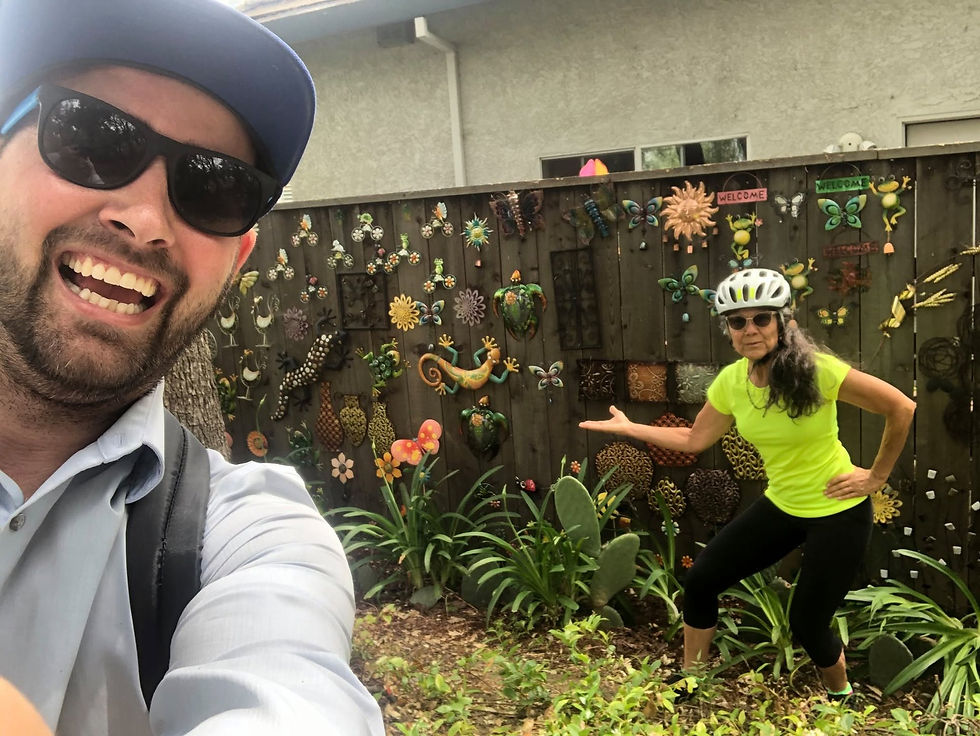
Eventually, however, through working with Maria, founder of The Bike Campaign, I began rediscovering bicycling—not just as transportation, but as something that builds healthier habits, stronger communities, and a more exhilarated life.
The surprising part wasn't being convinced of the importance of bicycling or why I might choose to lessen my dependence on a personal vehicle. It was how long it took my lifestyle to catch up with what I already believed.

Today I continue working with The Bike Campaign (doing graphics, web design, and marketing), my wife Milly and I continue to direct Davis’ Zombie Bike Parade Festival, and we now live in Portugal without owning a car. Looking back, I can see that none of those things happened by accident. They were shaped by growing up in Davis, by an extraordinary bicycling community, and by Maria, who patiently inspired me year after year.
When I moved to Davis in sixth grade, I had never owned my own bike. That changed quickly because I was expected to ride to school on my own. I remember being so inexperienced that the first time I needed to stop, I grabbed the front brake and nearly flew over my handlebars. Within time I learned to bike all around Davis as a way of hanging out with friends. It was our freedom.

I biked through the end of high school. Looking back, I wonder how much riding everywhere shaped me. Back then I had a lot of energy, was usually the fastest on my soccer team, and kicked butt at karate. My parents never drove me to school—not even in the rain. Thanks haha!
At 18 I got my own car. Like so many people, I stopped bicycling. My bike gathered dust.
It wasn't until years later, after meeting Maria through the Davis, CA Chamber of Commerce and becoming The Bike Campaign's graphic designer, that I started regretting driving everywhere as a default. Working with The Bike Campaign meant creating educational materials encouraging people to ride more. I was continuously learning about the health, environmental, psychological, and community benefits of bicycling. The Bike Campaign helped me to become immersed in Davis' incredible bicycle culture, and to gain access to bicycling opportunities throughout the community.

Meeting Maria didn't just encourage me to ride more. She introduced me to an entire side of Davis I never knew existed. What began as a graphic design opportunity slowly became one of the most rewarding parts of my life. Through The Bike Campaign I had the opportunity to:
• Found and directing the Zombie Bike Parade Festival—a festival founded by the Davis Odd Fellows and The Bike Campaign that has grown from about 250 riders to more than 1,000 bicyclists in the parade itself and nearly 3,000 participants throughout the festival. Every year, The Bike Campaign helps plan the route, coordinate ride guides and crossing guards, and make the event possible while we raise money for NorCal Trykers, which builds custom tricycles for children with disabilities.
• Help organize annual community rides like the Polar Bear Ride and Ice Cream Ride, working alongside Maria and an incredible team of volunteers.
• Create my “View from the Saddle” series, bicycling to historic places around Davis, researching their stories, and eventually turning the project into an exhibit at the Hattie Weber Museum of Davis.
• Lead a unit of e-bikes in Davis’ Picnic Day Parade, one of those “I can’t believe I get to do this” moments that included getting a picture of one of our bicyclists with the chancellor.
• Promote and enjoy uniquely Davis bicycling traditions like Loopalooza, leadership rides with local officials, the Great Davis Tree Hunt, Tour de Cluck, and other memorable rides that showed me just how deeply bicycling is woven into this community.

Looking back, I wasn't just learning about bicycling. I was learning about Davis. Bicycling became my gateway into local history, community service, civic leadership, and friendships that continue to shape my life today. Somewhere along the way, I realized I wasn't simply working for The Bike Campaign anymore. I was actively cultivating Davis’ zany bicycling culture (as Bob Dunning calls it).
Davis isn't just another city with bike lanes. It's America's first city to install modern on-street bicycle lanes, home to the U.S. Bicycling Hall of Fame, a Platinum Bicycle Friendly Community, and a place where bicycling is woven into everyday life. With over 100 miles of bike paths and greenbelts connecting neighborhoods, schools, parks, and shopping areas, it becomes surprisingly easy—and enjoyable—to leave the car at home.
There was another change happening inside me, too. I've always cared about representing my community in a positive way. I'd see longtime Davis leaders riding their bicycles and think, “That's the kind of community member I want to become.”

Former Mayor Robb Davis gave up driving completely for years, and that story always stuck with me. Later, when I briefly served as a City Commissioner, I made a point of bicycling to every commission meeting. It was a way of proving to myself that I just might be worthy of that role.
Still, ironically, during all of this bicycling activity and cultivating of culture, I was still driving almost everywhere.
I'd drive to the grocery store. I'd drive to work at the Davis Enterprise newspaper even though I lived less than two miles away. I'd even drive to Maria's house to do Bike Campaign graphics. Although, about half the time I'd make the conscious effort to show up on bike simply because I was embarrassed to show up to Bike Campaign meetings in my car. I wanted my actions to match the values I was helping promote.
Maria never judged me. She’d simply lead by example, espouse the benefits of bicycling, and let me borrow the occasional book on building bicycling communities.
Year after year she talked about the health, environmental, psychological, and community benefits of bicycling. I always believed her. It just took years for my lifestyle to catch up with what I already believed.

In early 2026 I decided to get serious about my health again. I changed my diet, started exercising, and losing weight. Then, right in the middle of that journey, Milly and I moved to Braga, Portugal for adventure and to upgrade our living. We also saw this as an opportunity to stop driving.
Giving up both of our cars has honestly been a blessing. Now we use public transportation, Ubers, and walk a lot more. We bundle errands together so that we can catch a ride downtown together and then walk between locations. So far, we don't miss owning a car at all.

Just a few days ago I was working with Maria from my new home office here in Portugal. It hit me that after all these years I could finally tell her something that made me proud. The Bike Campaign had finally helped me to match my actions to my ideals.
For years Maria, The Bike Campaign, and the Davis bicycling community encouraged me to Ride More. Now, living halfway around the world without owning a car, I finally feel like I'm living the second half of that message too. Drive Less.
It took me a long time for my lifestyle to catch up with what I already believed. Looking back now, I can see that my relationship with bicycling really has deepened over the years. What began as simply riding to school in Davis eventually became a way of thinking about my health, my community, and the kind of life I wanted to live.

Thank you, Maria, and to the many Davis community members who have helped me develop a more conscientious sense of values over the years. I love being a part of Davis’ zany bicycling culture, even from here abroad in Portugal. I’m making mental notes of bicycling infrastructure in Europe, and years from now hope to return to Davis to be a part of a bicycling culture that continues to evolve and thrive.


Comments